Queensland Whistling Tarantula
Selenocosmia crassipes
Selenocosmia • Theraphosidae
Overview
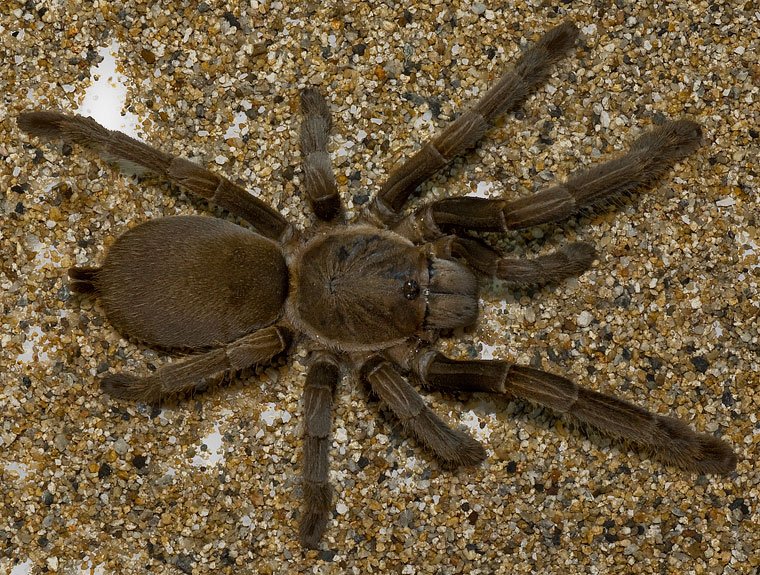
Selenocosmia crassipes is Australia's largest tarantula and the source of the common name 'whistling spider' or 'barking spider' — they produce a clearly audible stridulation (rubbing of chelicerae against fangs) as a threat display. They are deep burrowers in semi-arid Queensland habitats. In captivity, provide 6-8 inches of firm, packable substrate — a blend of red sandy clay and coco fiber mimics their native soil and holds tunnel structure well. Keep conditions drier than most tarantulas with periodic deep watering to maintain moisture at the substrate base. Venom is documented to cause significant pain, nausea, and in some cases severe systemic symptoms. They are rarely available outside of Australia (strict export laws); most specimens in captivity outside AU are zoo animals. If encountered, ensure legal provenance before acquiring.
Husbandry Requirements
Temperature & Humidity
Temperature
75-85°F
Humidity
50-65%
Enclosure Sizes
Substrate
Feeding Schedule
Prey size: large
Quick Stats
Type
fossorial
Adult Size
6-7 inches
Growth Rate
slow
Native Region
Queensland, Australia (semi-arid woodland and grassland)
Temperament
Highly defensive; stridulates loudly when threatened; fast and prone to biting
Behavior
Keeping a Queensland Whistling Tarantula?
Track its feedings, molts, and growth with Tarantuverse — our free companion app for keepers. Create an account in seconds.
Start tracking — it's free →Or explore Tarantuverse firstJust got a Queensland Whistling Tarantula?
Keep its whole story in one place — log feedings, molts, and growth, get molt and feeding reminders, and watch it grow over time. Tarantuverse is a free husbandry tracker for keepers, on web and mobile.