Home/Care Guides/Socotra Island Blue Baboon

Socotra Island Blue Baboon

Monocentropus balfouri

MonocentropusTheraphosidae

intermediate

Overview

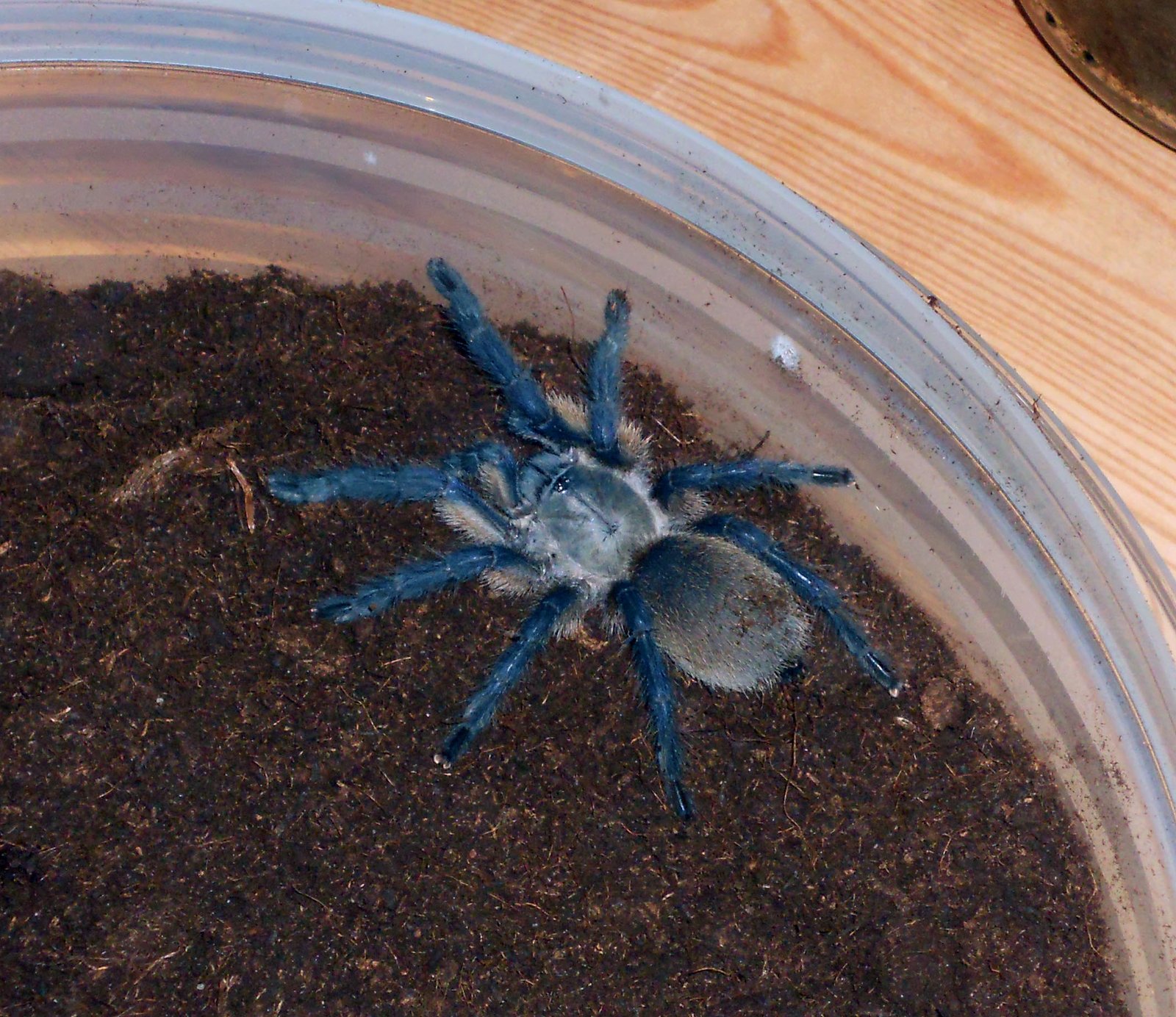
## Overview A stunning Old World terrestrial species endemic to Socotra Island off the coast of Yemen. Renowned for vivid blue and cream/tan coloration - blue carapace and legs with cream-colored body. One of the few truly communal tarantula species, capable of being housed in groups where mother spiders care for young. Spiderlings start grey and develop striking adult coloration around 1.25-1.75 inches. First described by Pocock in 1897, named for botanist Isaac Bayley Balfour who studied Socotra's unique flora and fauna.

## Husbandry

### Temperature Ideal: 78°F Range: 70-85°F Native to Socotra where average temperature is 28°C (82°F). Room temperatures in the 70-80°F range are adequate. Temperatures exceeding 82°F should be avoided. Growth rate is highly responsive to temperature - warmer temps accelerate growth. Tolerates nighttime drops to low 70s.

### Humidity Range: 30-70% Comes from semi-arid environment with average 65% humidity and only 193mm annual rainfall. Can be kept fairly dry - humidity around 50% is sufficient. Does not require high humidity like tropical species. Light misting on enclosure walls weekly and occasionally dampening substrate is adequate. Water dish is optional but not harmful.

### Substrate Type: Coconut fiber, peat moss, topsoil, or 60/40 mix of dry topsoil and peat Depth: 4-6 inches for burrowing

### Feeding Prey: Crickets, Dubia roaches, Mealworms, Red runner roaches Juvenile: 2 times per week (smaller prey preferred) Adult: Once every 7-14 days

## Behavior Temperament: Skittish Activity Level: Low

Defensive but less aggressive than other Old World baboon spiders. Fast-moving and will retreat to burrows when disturbed. Typically more likely to flee than stand ground. Can give threat pose and will bite if cornered, especially when protecting egg sacs. Classic 'pet hole' species - spends majority of time in burrow system. Creates elaborate silk-lined tunnel networks. Stridulates (makes barking/hissing sound) when disturbed. Crepuscular and nocturnal - emerges at dusk to hunt.

## Special Considerations

### Communal Housing One of the few truly communal tarantula species. Multiple specimens of different ages and sexes can cohabitate when introduced early and provided adequate food and space. Mother spiders exhibit remarkable maternal care, actively protecting young and allowing them to feed from her meals. However, communal housing requires careful management - provide enough space but not too large (prevents territorial behavior), ensure abundant food, and monitor for aggression. Some keepers report they seem happier and healthier in communal settings.

### Conservation Status Endemic only to Socotra Island, a UNESCO World Heritage site known for unique wildlife. Wild populations have been impacted by illegal wildlife trade. Captive breeding is strongly encouraged to reduce pressure on wild populations. Always purchase captive-bred specimens from reputable breeders.

### Display Limitations Classic 'pet hole' species that spends vast majority of time hidden in burrow system. Not ideal if seeking a visible display species. Primarily emerges at night to hunt. However, the extensive webbing and tunnel construction can be fascinating to observe.

### Old World Caution Despite being communal and relatively calm for an Old World species, this tarantula is fast, can be defensive, and has medically significant bite potential. Handling is not recommended. Not a beginner species.

Husbandry Requirements

Temperature & Humidity

Temperature

70-85°F

Humidity

30-70%

Enclosure Sizes

Adult:16"L x 12"W x 6"H minimum

Substrate

Type:Coconut fiber, peat moss, topsoil, or 60/40 mix of dry topsoil and peat
Depth:4-6 inches for burrowing

Feeding Schedule

Juvenile:2 times per week (smaller prey preferred)
Adult:Once every 7-14 days

Prey size: Crickets, Dubia roaches, Mealworms, Red runner roaches

Quick Stats

Type

terrestrial

Adult Size

5-7"

Growth Rate

medium

Native Region

Socotra Island, Yemen - arid rocky wadis, rock crevices, elevations up to 850m

Temperament

Skittish

Behavior

Webbingheavy
BurrowingYes
Water DishRequired

Track Your Collection

Log feedings, molts, and growth with Tarantuverse - our free companion app for keepers.

Visit Tarantuverse →