Home/Care Guides/Madagascar hissing cockroach

Madagascar hissing cockroach

Gromphadorhina portentosa

GromphadorhinaTheraphosidae

beginner

Overview

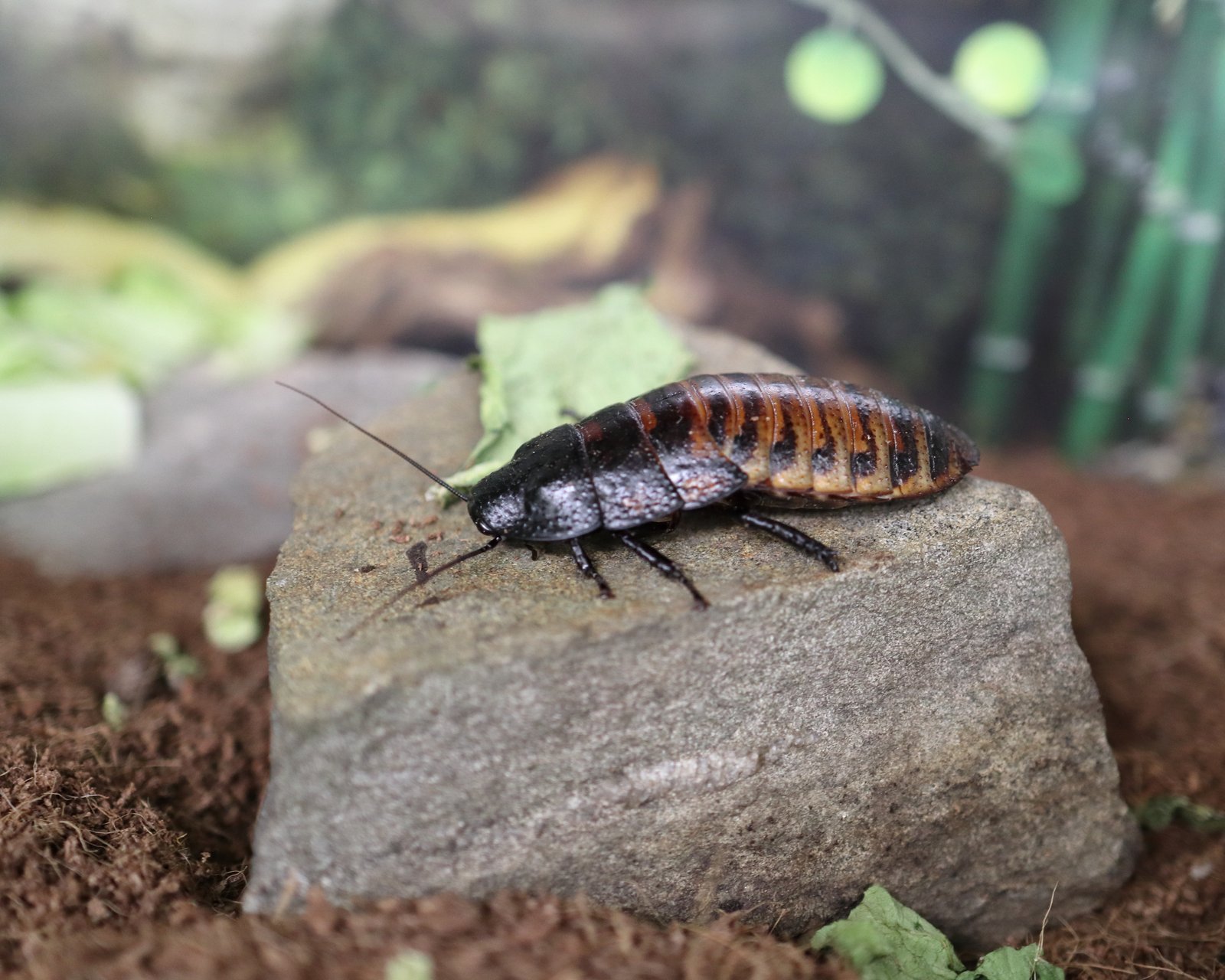
Overview Large, wingless cockroach native to Madagascar. Adults typically reach 2–3.5 inches in length, with a broad, flattened body and dark brown to black coloration. They are famous for their audible hissing, produced by forcing air through spiracles, and for their calm, handleable temperament. Excellent climbers that can scale smooth glass and plastic surfaces.

Husbandry

Temperature Ideal: 78°F Range: 70-85°F Keep hissers warm and stable. They remain active and breed best when maintained around the upper 70s to low 80s °F. Temperatures in the low 70s °F are generally safe but will slow activity and reproduction. Avoid prolonged exposure below 65 °F, as this can cause stress and health issues. A low-wattage heat mat on a thermostat or a warm room often provides sufficient warmth.

Humidity Range: 50-70% Provide moderate to relatively high humidity with good ventilation. Aim for a moist–to–slightly-dry gradient by lightly misting one side of the enclosure or maintaining a moisture-retentive substrate in part of the tank. Overly dry conditions can lead to bad molts and poor reproduction, while constantly saturated substrate can cause mold and bacterial issues. A humidity range of about 50–70% with a dry area works well.

Substrate Type: A mix of coconut fiber, peat-free compost or topsoil, and/or dry leaf litter; optionally with a layer of wood shavings or dried leaves for leaf-litter style setups. Depth: 1–3 inches depending on whether you want mostly surface-dwelling or shallow burrowing behavior.

Feeding Prey: Dark leafy greens (e.g., romaine, collard greens, dandelion greens), Vegetables (carrot, sweet potato, squash), Fruits (apple, banana, orange, melon – in moderation), Commercial roach or insect diets, High-quality dry dog or cat food (as protein supplement), Whole-grain cereals or oats Juvenile: Offer a variety of fresh vegetables and fruits daily, with a constant supply of dry chow or roach diet available at all times. Adult: Offer fresh vegetables and fruits daily or every other day, removing uneaten soft foods within 24 hours; keep a constant supply of dry chow or roach diet available.

Behavior Temperament: Docile Activity Level: Moderate

Hissing cockroaches are generally calm, slow-moving, and tolerant of gentle handling, which makes them popular for education and as beginner invertebrate pets. When disturbed, especially males, they may hiss loudly and brace themselves, but they rarely bite. They are primarily crepuscular/nocturnal, becoming more active at night. Males may spar and hiss at each other over territory and mates, particularly in warm, crowded conditions, so providing adequate space and structure helps reduce stress.

Special Considerations

Escape prevention Hissing cockroaches are excellent climbers and can scale smooth glass and plastic. Always use a secure, escape-proof lid and/or a roach barrier around the top inner rim of the enclosure. Check that all ventilation holes are small enough that nymphs cannot squeeze through.

Ventilation and humidity balance These roaches appreciate relatively high humidity but also require good ventilation to prevent mold and bacterial buildup. Aim for a moist side and a drier side, with plenty of airflow through a screened lid or vents rather than sealing the enclosure.

Allergies and cleanliness As with many cockroaches, prolonged exposure to frass (droppings), shed skins, and dust may aggravate allergies or asthma in sensitive individuals. Regular cleaning, removal of moldy food, good ventilation, and the use of a HEPA filter in the room can help reduce allergen load.

Population control Warm, well-fed mixed colonies will reproduce steadily. If you do not want a large breeding colony, keep only same-sex groups or periodically rehome excess offspring. Cooler temperatures within the safe range and more modest feeding can slow reproduction.

Husbandry Requirements

Temperature & Humidity

Temperature

70-85°F

Humidity

50-70%

Enclosure Sizes

Adult:12"L x 8"W x 10"H minimum

Substrate

Type:A mix of coconut fiber, peat-free compost or topsoil, and/or dry leaf litter; optionally with a layer of wood shavings or dried leaves for leaf-litter style setups.
Depth:1–3 inches depending on whether you want mostly surface-dwelling or shallow burrowing behavior.

Feeding Schedule

Juvenile:Offer a variety of fresh vegetables and fruits daily, with a constant supply of dry chow or roach diet available at all times.
Adult:Offer fresh vegetables and fruits daily or every other day, removing uneaten soft foods within 24 hours; keep a constant supply of dry chow or roach diet available.

Prey size: Dark leafy greens (e.g., romaine, collard greens, dandelion greens), Vegetables (carrot, sweet potato, squash), Fruits (apple, banana, orange, melon – in moderation), Commercial roach or insect diets, High-quality dry dog or cat food (as protein supplement), Whole-grain cereals or oats

Quick Stats

Type

terrestrial

Adult Size

2-3.5"

Growth Rate

medium

Native Region

Madagascar – tropical forest floor, especially in and around rotting logs

Temperament

Docile

Behavior

Webbingnone
BurrowingNo
Water DishRequired

Track Your Collection

Log feedings, molts, and growth with Tarantuverse - our free companion app for keepers.

Visit Tarantuverse →